I made an unexpected discovery on a photo walk the other day: this sticker on a utility box.
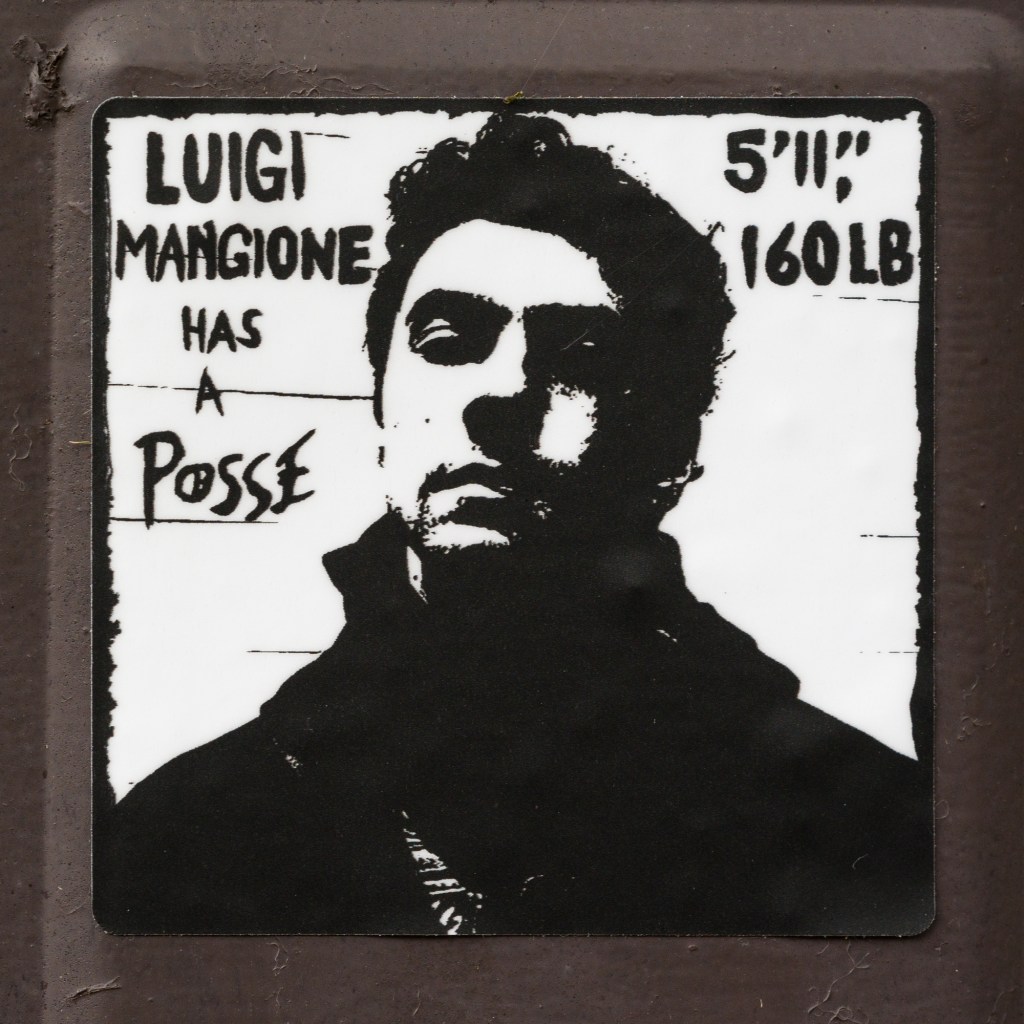
The face and name were immediately familiar: Luigi Mangione, whose image became widely recognizable after his arrest in connection with the 2024 shooting death of UnitedHealthcare CEO Brian Thompson. The design took me longer to place. Then it clicked: Shepard Fairey’s Andre the Giant Has a Posse.

Fairey created the original sticker in 1989 while studying at the Rhode Island School of Design. He used a photograph of professional wrestler André Roussimoff, better known as André the Giant, while showing a friend how to cut a stencil. The image first spread as a sticker around Providence, then farther afield to Boston and New York, and eventually across the United States.
The experiment helped launch Fairey’s career. By the end of 1995, the campaign was evolving into the OBEY Icon Face as he sought to distance it from André and give it a more universal, Orwellian “Big Brother” character. Fairey later reached a much wider audience with his 2008 OBAMA HOPE portrait, a version of which is now held by the National Portrait Gallery.
Within three months of the Posse sticker’s debut, reinterpreted bootleg copies began to appear. The tradition has continued for decades. In a 2020 post promoting The Bootleg Posse Project, Fairey reflected on those early copies, describing the original André bootlegs as “memes from when memes lived outside the digital realm and had a bit of mischief and mystery.”
That tradition is documented in a dedicated Bootlegs gallery on Fairey’s site, with variations featuring real people and fictional characters alike, from Vogue editor Anna Wintour to Fight Club‘s Tyler Durden. The joke has even folded back on itself in a Fezzik Has a Posse T-shirt design, returning André to the format through Fezzik, the character he played in The Princess Bride.
The Mangione sticker I found in Kingston belongs unmistakably to the same lineage. I don’t know who made it, or why they chose him, but I’m struck by this visual language turning up so close to home, 37 years after the original.
That may be one of the things I enjoy most about my street-art photo walks: you never know when a small observation will open a trail into decades of visual culture.
Published: 4 October 2026

