Some museums have a presence of their own, where architecture becomes part of the encounter. The Louvre in Paris is such a place, and the second-century BC Greek monument Winged Victory of Samothrace commands the main staircase, where it has stood since 1884.
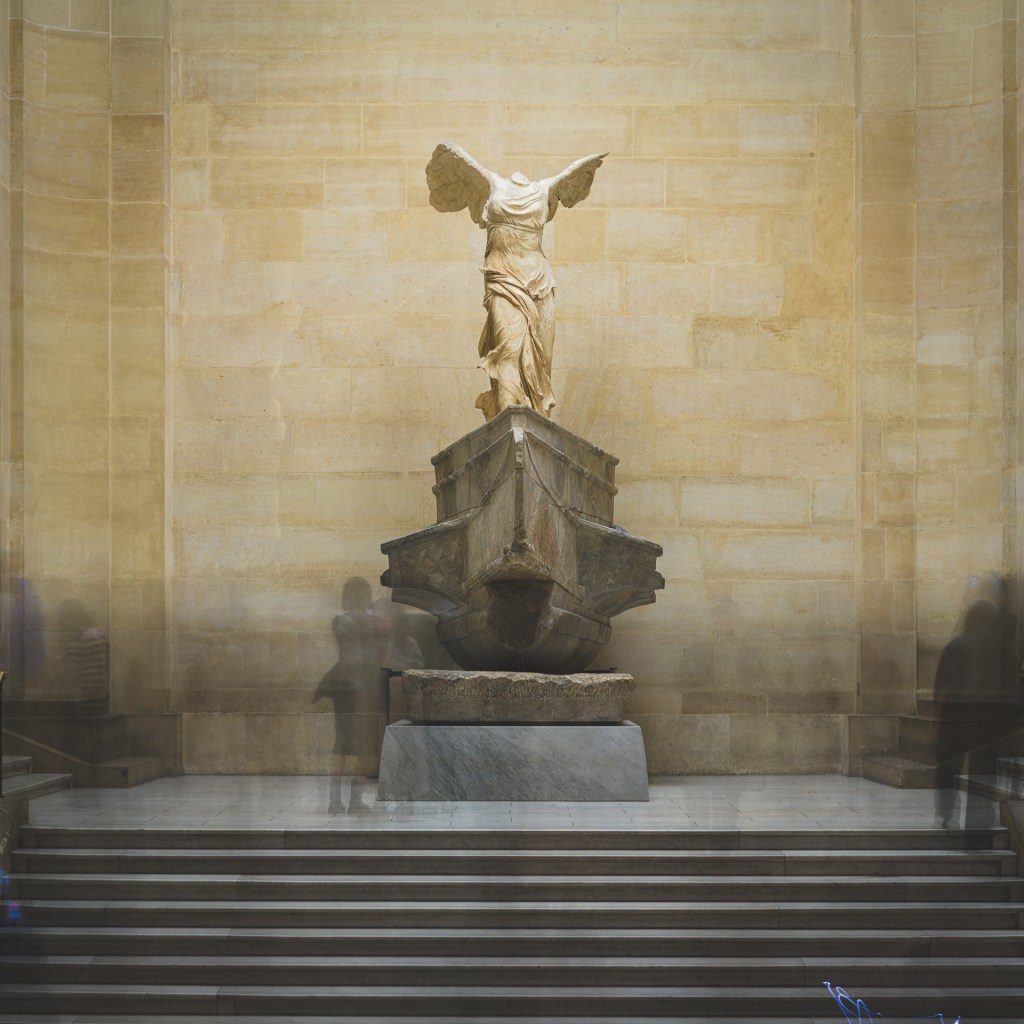
Centre: Long exposure, 161s, 10-stop ND, f/4, ISO 100
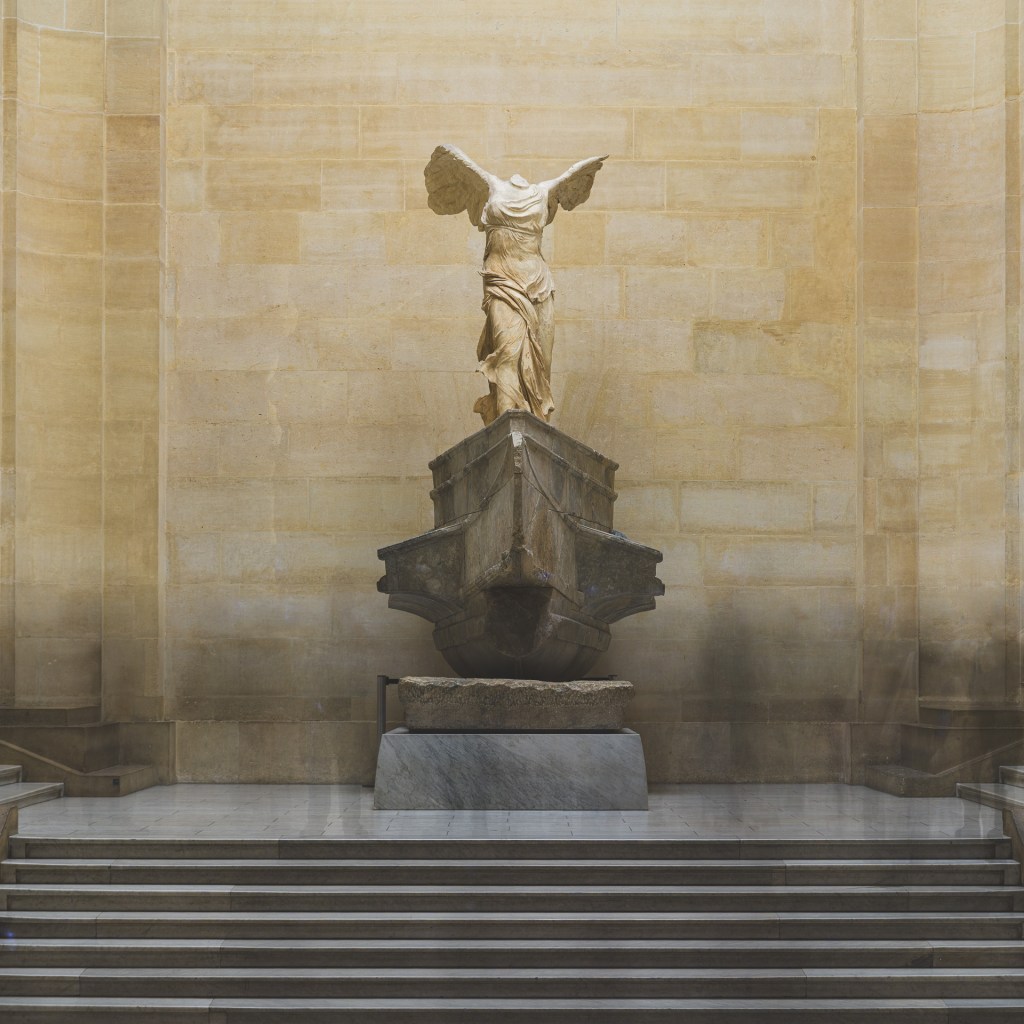
Right: Long exposure, 323s, 10-stop ND, f/5.6, ISO 100
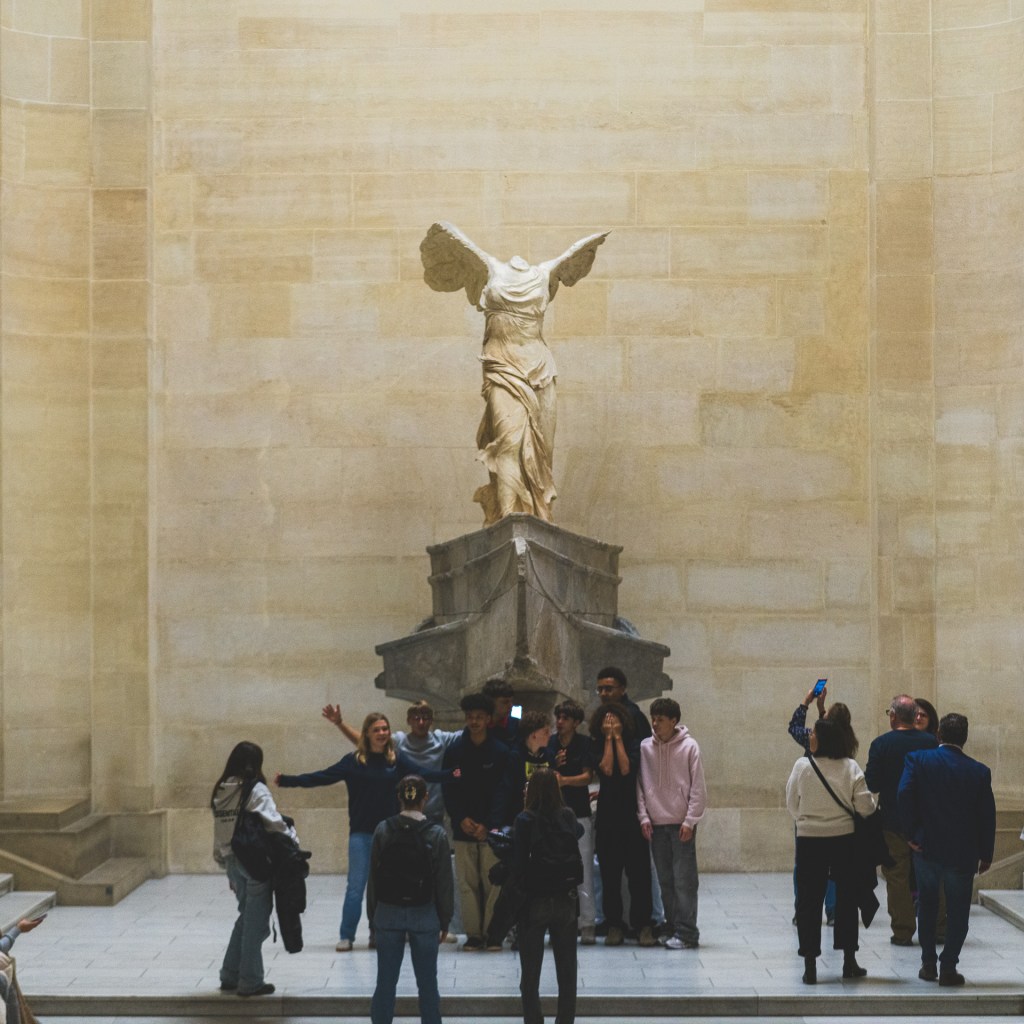
Making a resonant image in this environment is challenging. The first photograph is the one the museum gives you: bodies gathered at the foot, phones raised, attention pulled in every direction.
As I made my way up and around to the top of the staircase, I realized that by placing the camera low at the base of the railing, out of the flow of visitors, I could look back and make a long exposure without needing a tripod. Using a 10-stop neutral density filter to lengthen the exposure, the first exposure failed usefully. At 161 seconds, the crowd had loosened, but several bodies still held their shape. A blue phone-light trail crossed the lower right of the frame, making a reshoot necessary. I welcomed the excuse.
By stopping down from f/4 to f/5.6 and doubling the exposure to 323 seconds, I kept the same overall exposure while giving the crowd more time to surrender to duration.
The final image isn’t one we can see naturally with our eyes. It shows the museum filled with the flow of time and people. Visitors pass through the frame without resolving as individuals. They become atmosphere, a kind of human fog moving through stone and light.
There is some irony in calling this Crowd Control. I didn’t control the crowd at all. I waited with it, allowing the camera to show us something otherwise unseeable.
Published: 8 June 2026

